
The Best Paint for Kitchen Cabinets: Everything You Need to Know!

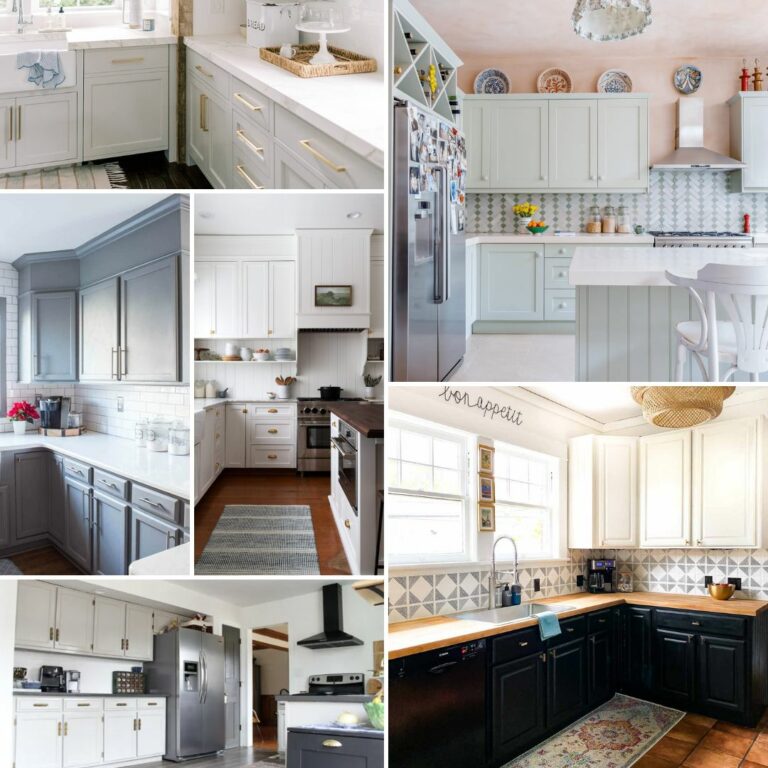
Ready to transform your kitchen cabinets? It's so important to select the right paint for the job. Read on to learn about the best paints for kitchen cabinets and to see 11 successful cabinet transformations.
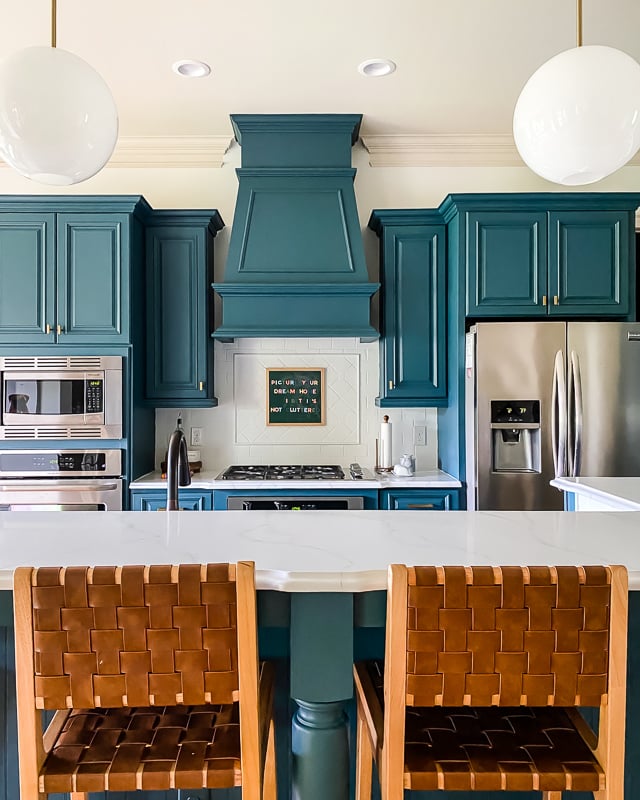
No other project seems to frighten, baffle, and confound readers quite as much as painting cabinets. I get asked about it all the time. Here’s the deal, y'all—I get it.
Kitchen cabinets make a huge impact on the overall look of your kitchen. Aside from walls and flooring, cabinetry is probably the most significant source of decorating anxiety. When cabinets look bad, they look BAD. There's no way to avoid them. You might face a big orange or tan eyesore front and center in your kitchen.
Hiring professional painters to paint your cabinet doors is EXPENSIVE (and I've heard so many horror stories of awful results). But painting cabinets yourself seems like a lot of work. We've all heard nightmare stories of sanding, priming, yellowing, peeling, and flaking. It feels like a lot of effort to put into a project when you're not sure it's going to turn out with the smooth finish you hope for. It's a big leap of faith.
Well, I promise you, it can be done! I have now painted kitchen cabinets a total of THREE times. Yes, three. And each time I've gotten gorgeous and durable results.
This post contains affiliate links for your convenience. Click here for my full disclosure policy.
First, let's cover the two types of kitchen cabinet paints I have personally used and recommend.
Paints That Minimize Brush Marks & Don't Require Primer
Let me start by noting that I don't personally recommend painting the inside of your cabinets. I only paint the doors (inside and outside) and the cabinet frame. Doing that will save you so, so, so much time. I'm also frequently asked about whether to use a paint sprayer. I believe all of the paints listed below would work with a paint sprayer. But I personally have found that the amount of prep involved for spraying something INSIDE your home is simply not worth the hassle or effort.
I also want to mention that, to the best of my knowledge, there is no type of paint on the market that can eliminate the wood grain in your cabinets. You can get the best finish to minimize how visible the wood grain is by using a completely flat paint or topcoat (which reflects less light and therefore makes it harder to see the wood grain), but paint alone is not going to magically get rid of it for you.
With that in mind, let's dive into the best paints for kitchen cabinets!
General Finishes Milk Paint (low VOC, self-sealing interior mineral-based paint)
The first time I tackled kitchen cabinet projects was in 2014, when I painted my kitchen cabinets with NO SANDING OR PRIMING. Now, I’d love to brag about it and claim it was all my decorating genius and magic touch, but I’ve got to be humble and give props to the true hero of the story: the high-quality paint and topcoat I used.
My project's success was largely due to finding the best cabinet paint. I used General Finishes Milk Paint. Despite its name, it's just a very high-quality acrylic paint with very low VOCs, and it's almost odorless. I want to sing their praises from the rooftops, y'all! They're amazing (and, no, I am not on their payroll and was NOT paid by them for my ‘How to Paint Kitchen Cabinets' post). It was easy to use and went on like a dream. The General Finishes High-Performance Top Coat was also AMAZING! It comes in a variety of sheens. I wanted a matte finish, so I used the flat sheen; however, it is also available in high-gloss, semi-gloss, and satin options.
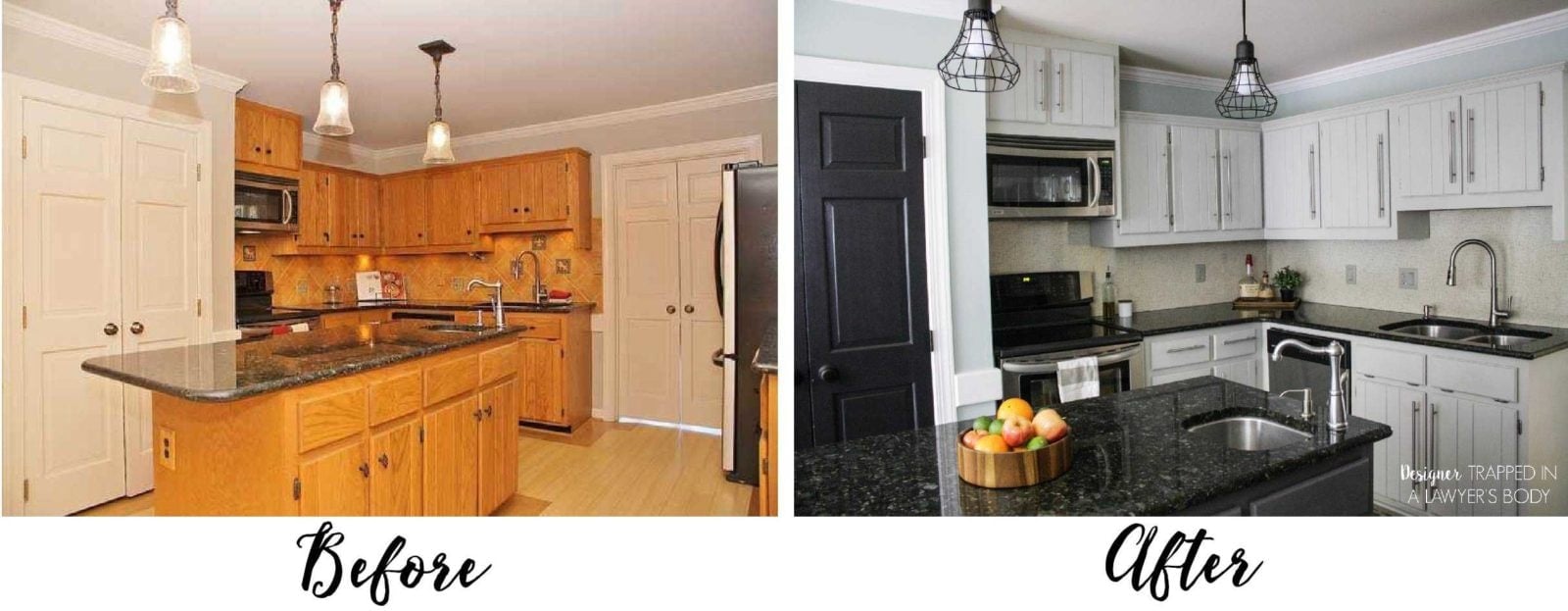
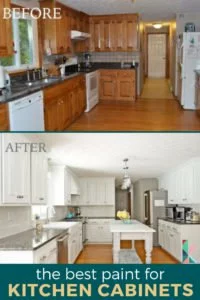
You can see my full tutorial using General Finishes Milk Paint in my post about how I painted my kitchen cabinets with NO SANDING OR PRIMING. The short version is that very little prep was required. I simply cleaned my cabinets well (to remove any grease and grime) and then rubbed them down with liquid deglosser. Then I painted! No priming or sanding required! I used a roller for the large flat surfaces and a paintbrush for the details. We had PERFECT results with a durable finish that lasted us over 5 years until we completely gutted and renovated that kitchen. I wrote this entire post about how our kitchen cabinets held up. Skipping the priming and sanding down to raw wood saved us TONS of stress and time. You can see the before and after of our first kitchen cabinet painting project below!
Fusion Mineral Paint (100% acrylic, water-based paint with natural pigments)
Fast forward to 2019, when I helped my friend Thea transform her dark and dated kitchen for less than $1,000. Since this DIY and home décor blog is my full-time job, which depends on finding new and potentially better ways to do things, I wanted to try a different method, and Thea was game!
After lots of research, I decided to paint her cabinets with Fusion Mineral Paint. It is 100% acrylic, water-based, with NO added latex or vinyl. It also has very low VOCs and is almost odorless.
Fusion Mineral Paint has EXCELLENT adhesion to pretty much any material, which is why you won't need to use a primer before painting (unless you have laminate cabinets). You can even paint laminate cabinets with it if you use Fusion Mineral Paint Ultra Grip or a shellac-based primer first. And, it has an industrial-grade resin that gives it a water-resistant finish. If you're looking for ease of use, this paint is where it's at!

EXCLUSIVE DISCOUNT
I've never been sponsored or paid by Fusion Mineral Paint, but they have generously offered my readers a 10% discount, which will be automatically applied when you click and order here.
Remember, a little bit of this paint goes a LONG way, so you don't need much (we used only 4 pints to paint the wood surface of our kitchen cabinets as part of our budget-friendly kitchen makeover).
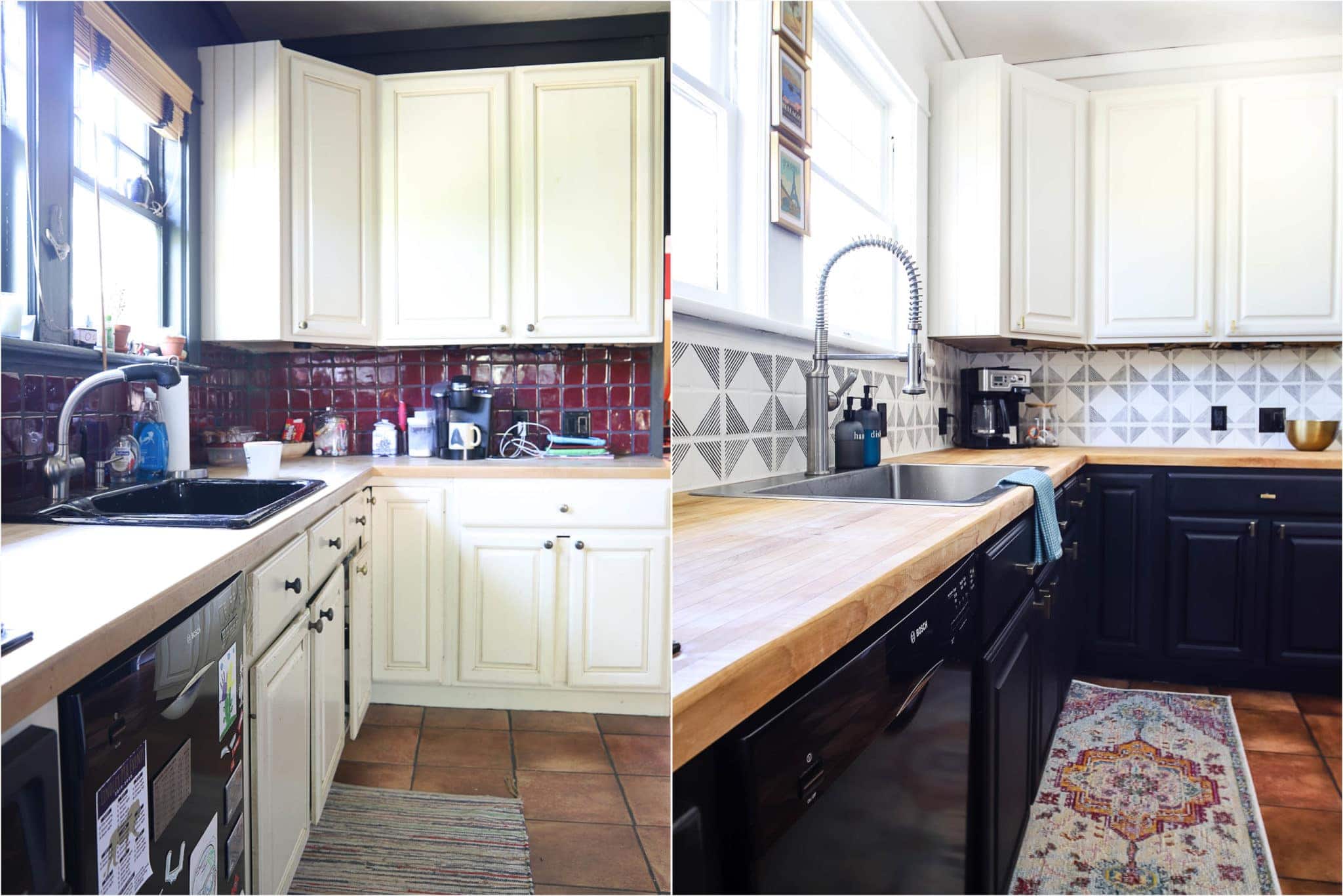
Best of all, Fusion Mineral Paint requires minimal preparation of a clean surface and may only need a light hand-sanding. That's all we did in Thea's kitchen, and the light-sanding took no more than 30 minutes for all her cabinets combined, so don't let that put you off. Her kitchen cabinets turned out beautifully, and they are still in perfect condition–no peeling or chips to be seen! Look at that transformation.
While Fusion Mineral Paint doesn't require a topcoat for things like furniture, I DO recommend using Fusion Mineral Paint Tough Coat on light colors (like Thea's upper cabinets) and Fusion Mineral Paint Natural Stain and Finishing Oil on dark colors.
You can check out the full post on how to paint cabinets with Fusion Mineral Paint in this post. You can also watch the video below!
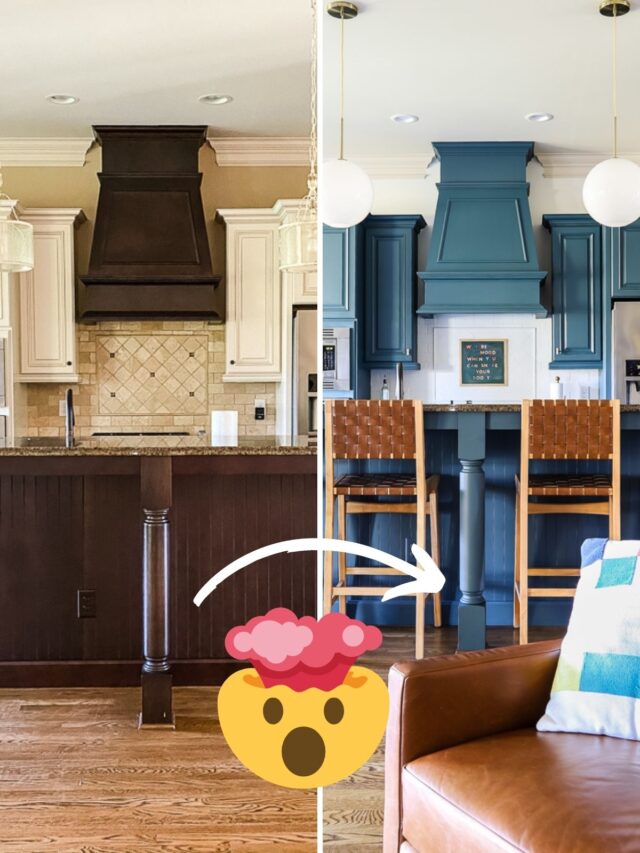
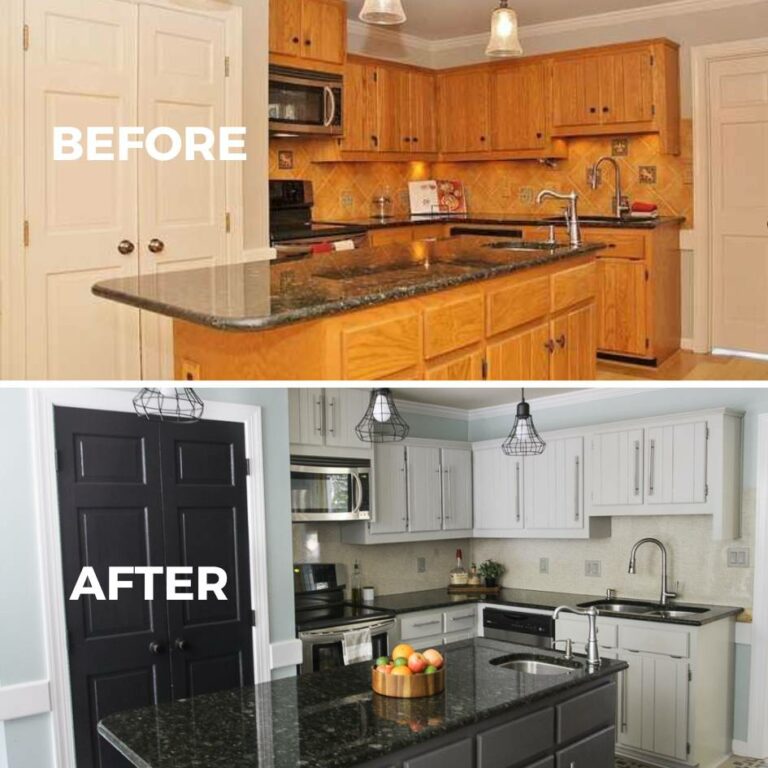
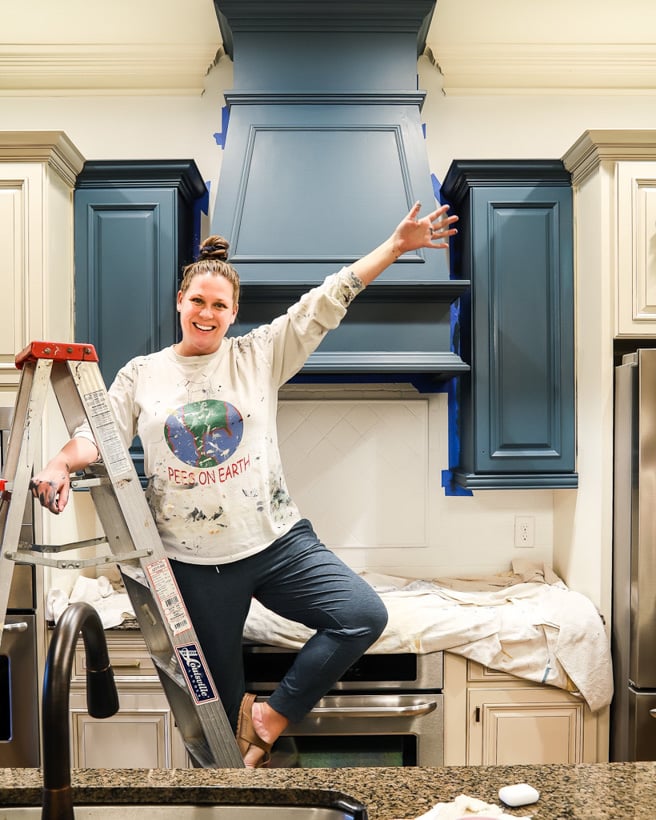
I was so impressed with the Fusion Mineral Paint in Thea's kitchen that I decided to use it when I painted the wood cabinets in our new house. I used the same method and am just as happy with the results! You can watch a short video recap of my kitchen cabinet painting here. And, you can see the before and after of my current kitchen below. Remember, a little bit of this paint goes a LONG way. This also only took 4 pints to paint my entire kitchen. I used the color Seaside and got full coverage (with very few spot touch-ups) and only one coat.
While I love and highly recommend Fusion Mineral Paint and General Finishes Milk Paint based on my own personal experience, there is one other option that I would personally recommend for painting kitchen cabinets.
Sherwin-Williams Emerald Urethane Trim Enamel
I will start by pointing out that we have not used Sherwin-Williams Emerald Urethane Trim Enamel to paint kitchen cabinets. But, we have used it for two projects that have allowed us to test the durability of the finish and wow… I have been incredibly impressed and would strongly consider using it if/when we paint kitchen cabinets ourselves again.
We did prime before applying it to both of our projects, and we did very quick and light sanding in between coats. But for the results we achieved, the bit of extra effort was well worth it. The finish is silky smooth and incredibly durable.
First, we used it for painting the handrails of our staircase when we replaced our stair balusters as one part of our big staircase makeover. It was a dream to work with. It goes on smooth and levels itself beautifully. We painted our stair railing with it nearly 4 years ago and trust me when I say the railing has been used and abused on a regular basis. The paint still looks absolutely perfect.
We were so impressed with Sherwin-Williams Emerald Urethane Trim Enamel that we later used it to paint the DIY dog crates and custom bench for our bedroom. No, they aren't kitchen cabinets, but they are all solid wood cabinetry we built and painted. And they get used, touched, and banged into frequently. We painted them nearly two years ago, but the paint looks the same as it did the day we finished.
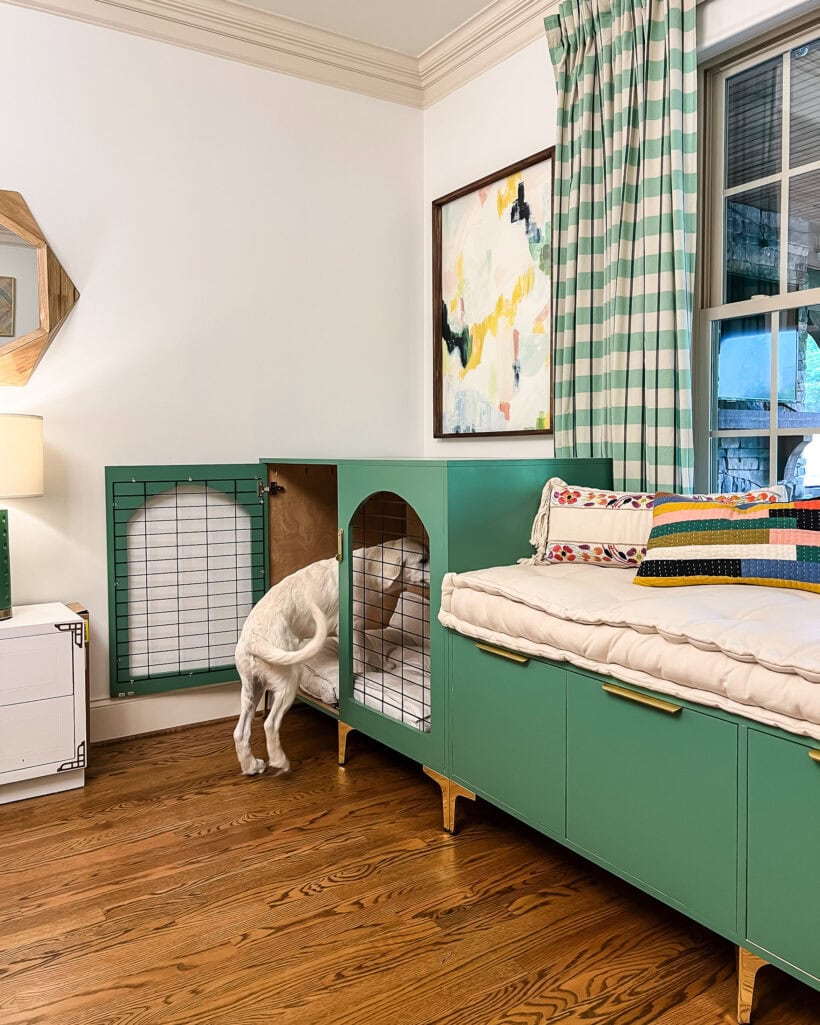
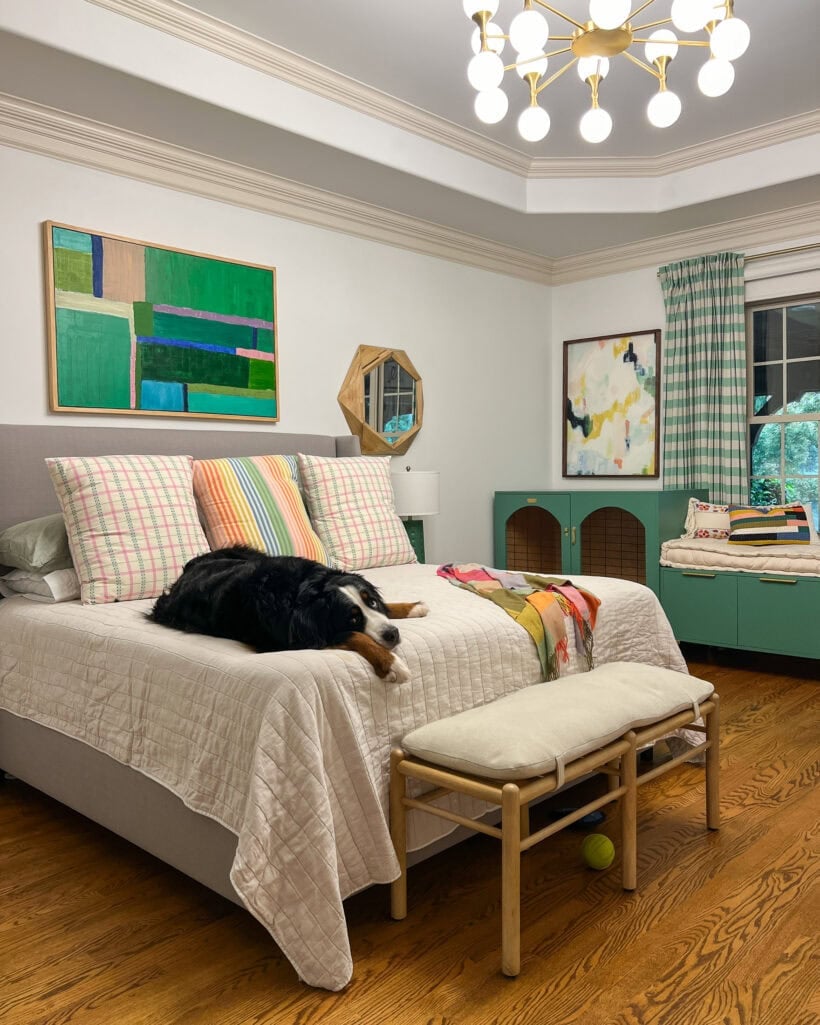
Now that I've told you about the paints that we have personally used and recommend for painting kitchen cabinets, I want to share with you other kitchen paint options that I found based on my research. What IS the best paint for kitchen cabinets? What KIND of paints are used and recommended? Who ended up with GREAT results?
If you're ready to tackle the dreaded challenge, consider these other successful kitchen cabinet painting projects to find the best paint for your cabinets and join the success club!
More Kitchen Cabinet Paint Options
I'm not the only blogger who has successfully painted my kitchen cabinets, so let's take a look at some other successful cabinet transformations using different types of paint from others around the blogosphere.
Benjamin Moore Advance Paint (premium quality, waterborne alkyd paint)
I quickly found that MANY people have used Benjamin Moore Advance Paint with great success. At this point, if I were to try another kitchen cabinet paint, it would probably be this one, given its popularity. Let's take a look at some of the Benjamin Moore Advance Paint success stories!
Props to Lauren at Lauren McBride Blog for recognizing she had quality cupboards that needed painting to make her dreams of white kitchen cabinetry come true! Lauren used Benjamin Moore Advance Satin Finish, and she used a sprayer! After initially not being sure she loved the look, she reports that once the paint dried and leveled out, the brushstrokes on the trim were undetectable and stunning! You can click here for Lauren's full tutorial and more details about the paint and color she used.
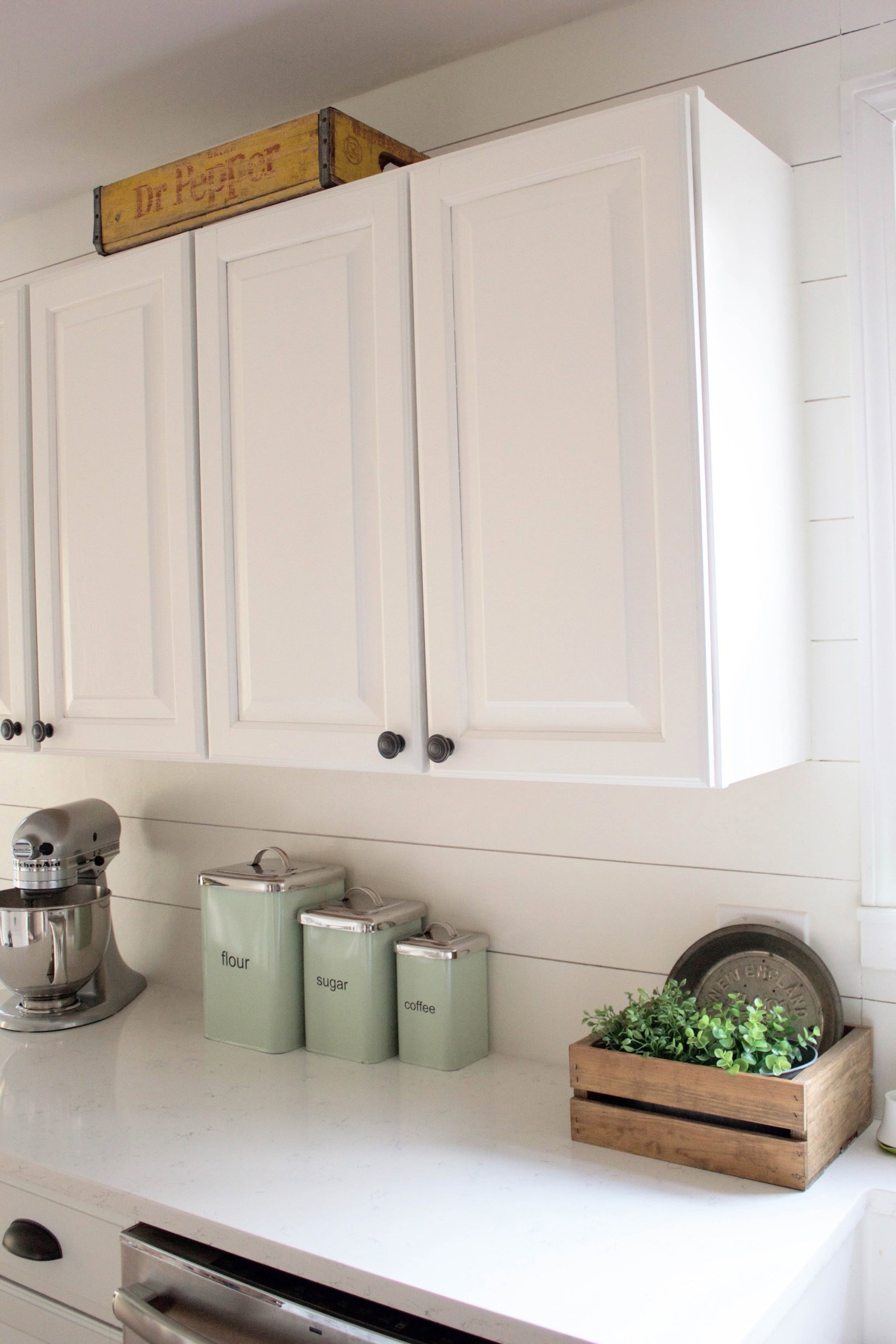
Laura at Inspiration for Moms had the familiar “orange is the new yuck” oak cabinets (why did everyone LOVE those in the 80s and 90s?!). She painted her cabinets a gorgeous grey as part of her total kitchen makeover.
Laura also used Benjamin Moore Advance Interior Paint, which she chose because it's self-leveling and is water-based, BUT it “acts like an oil-based paint.”
Like Lauren, Laura also used a sprayer for her cabinets. She highly recommends the particular sprayer she used to get a super smooth surface. You can click here to get her full tutorial and all the details on the paint and sprayer she used. Her finished results look great, and with the subway tile and extenders on the top of the cabinetry, it's a show-stopping transformation!

Insl-X Cabinet Coat (acrylic satin enamel paint)
Nina Hendrick used an acrylic satin enamel paint (Insl-X Cabinet Coat), which I had never heard of, but I'm impressed with the results she got! But, where Nina's process really stands out from all the other projects (including my own) is how she managed to COVER THE GRAIN! Gorgeous, factory-level professional finish! These cabinets are stunners.
She’s very upfront about her process—this isn’t a project for beginners. It’s uh…involved, to say the least. However, if you’re really dying to get ultra-smooth cabinets with a “paid-top-dollar-for-this” look, click here to check out her tutorial that will walk you through all the steps.
If you’re teetering between splurging on high-end cabinets or going all-out to cover the grain in your existing cabinets, this tutorial is here to show you how to achieve excellent results!
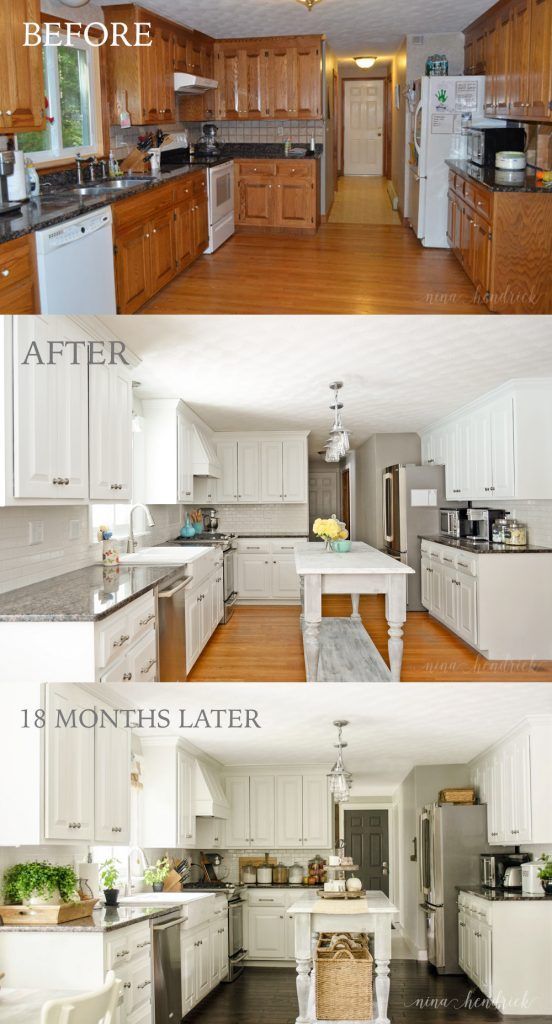
The transformation from pretty awful 80s-style cabinets to a lovely white is truly something to behold. This post is serious inspiration, y'all.
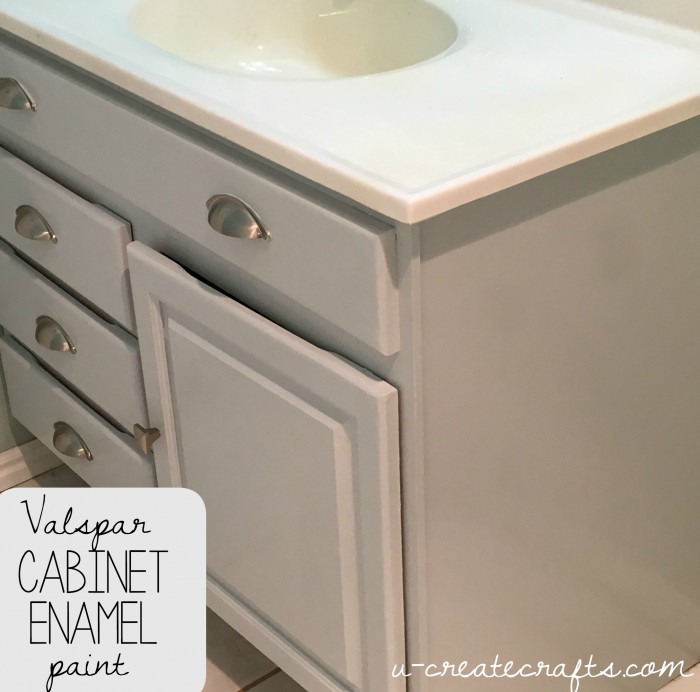
Valspar Cabinet Enamel Paint (oil-enriched enamel)
Kari at U-Create Crafts shared her cabinet nightmare! Her first attempt at painting cabinets was traumatizing (like so many have experienced). Her cabinets turned out yellow and terrible.
Fortunately, the second attempt worked out much better. She used Valspar Cabinet Enamel paint, which is meant explicitly for cabinets. She reports coverage with one coat, but she opted for two to give her cabinets a more polished look. Kari’s thoughts on attempt #2: she's very happy with her second results! You can click here to head over to Kari's blog to learn more about the paint and process she used.
There are many options for cabinet-specific paint. Many of these paints don’t call for sanding or priming. They’re created specifically to work with common cabinet finishes, so they are definitely worth considering!
Basic Latex Paint
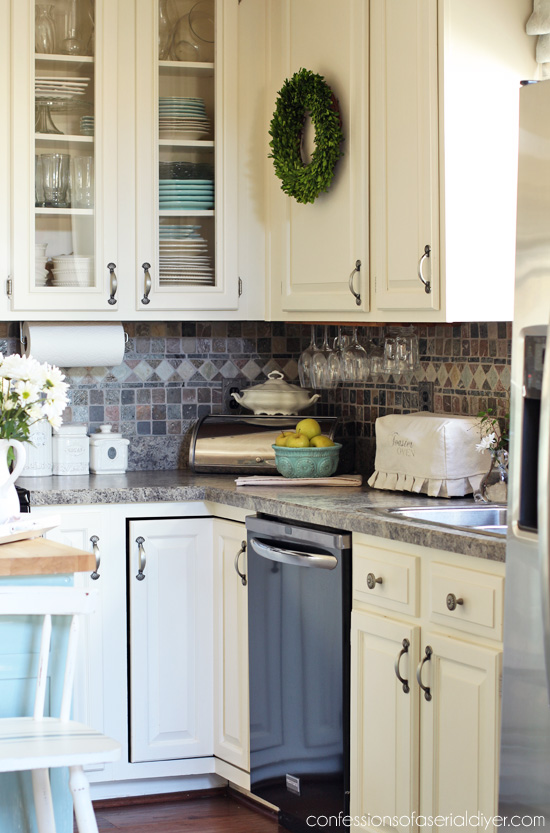
Christy's cabinets turned out beautifully using basic latex paint. I found this shocking because I have painted furniture and the cabinets in our old laundry room with basic latex paint and had chipping and peeling almost immediately. I found it wasn't a good option for my own cabinets in high-traffic areas. Christy recommends deglossing and sanding in addition to using a paint with a built-in primer, as well as applying a good primer separately for better coverage. So, while using basic latex paint is an option, it certainly seems quite labor-intensive if you want to achieve results that last. You can see how her cabinets were holding up after 3 years in this post. Christy, over at Confessions of a Serial DIYer, offers a great tutorial on her blog, walking you through her cabinet painting process, which is quite different from the process I used, but clearly still as effective. Click here to head over to her blog for her full tutorial and for information on exactly what paint brand she used!
I hope you're feeling as inspired as I am after checking out these incredible cabinet transformations. You see, there are plenty of people who've had successful cabinet painting experiences, and there seem to be several options when searching for the best paint for kitchen cabinets. Decide on how much work you want to put in and the type of paint finish you're looking for, and then GO FOR IT!
You absolutely can paint your kitchen cabinets and be happy with the results! These tutorials are proof that the best paint for kitchen cabinets exists, and YOU can find it and love your new cabinets!
Be sure to save this post on Pinterest and/or share it on Facebook so you can find it again later!
More CABINET POSTS
Other Posts You Will Enjoy:
Wondering how I approach transforming rooms and spaces in our home? Check out Designer in a Binder®.

And if you want exclusive content and behind-the-scenes sneak peeks, be sure to subscribe before you head out!

I literally re-hung the last of the painted doors last night! My advice on painting your cabinets: pay someone to do it for you :)
I used Sherwin Williams ProClassic after sanding and priming. It took me several months to finish this project, but that was mostly because I live in a tiny condo without an actual workspace, and I had to do the project in stages. The biggest challenge was keeping my dog away from the wet paint!
One thing I hadn’t thought of in advance: the “daylight” bulbs in my kitchen, which had been very bright and cheery on the orangey veneer, looked super harsh and overly blue on the new paint (Pure White). I swapped them out for “warm white” and the difference was astounding.
I gave the paint at least a week to cure before rehanging the doors and putting the hardware back on, but I’m a little worried about the paint sticking to the pulls if I ever want to swap the hardware in the future. Anyone have any experience with that?
Hi Lori! Painting kitchen cabinets definitely isn’t for everyone, but I’m so glad we painted ours–it just wasn’t in our budget to hire out the job. I haven’t tried removing our hardware, so I’m not sure about the paint sticking to the hardware. Thanks so much for reading!